Electronic Shelf Labels and Smart Retail for Saudi Hypermarkets, Grocery and Pharmacy
About This Solution
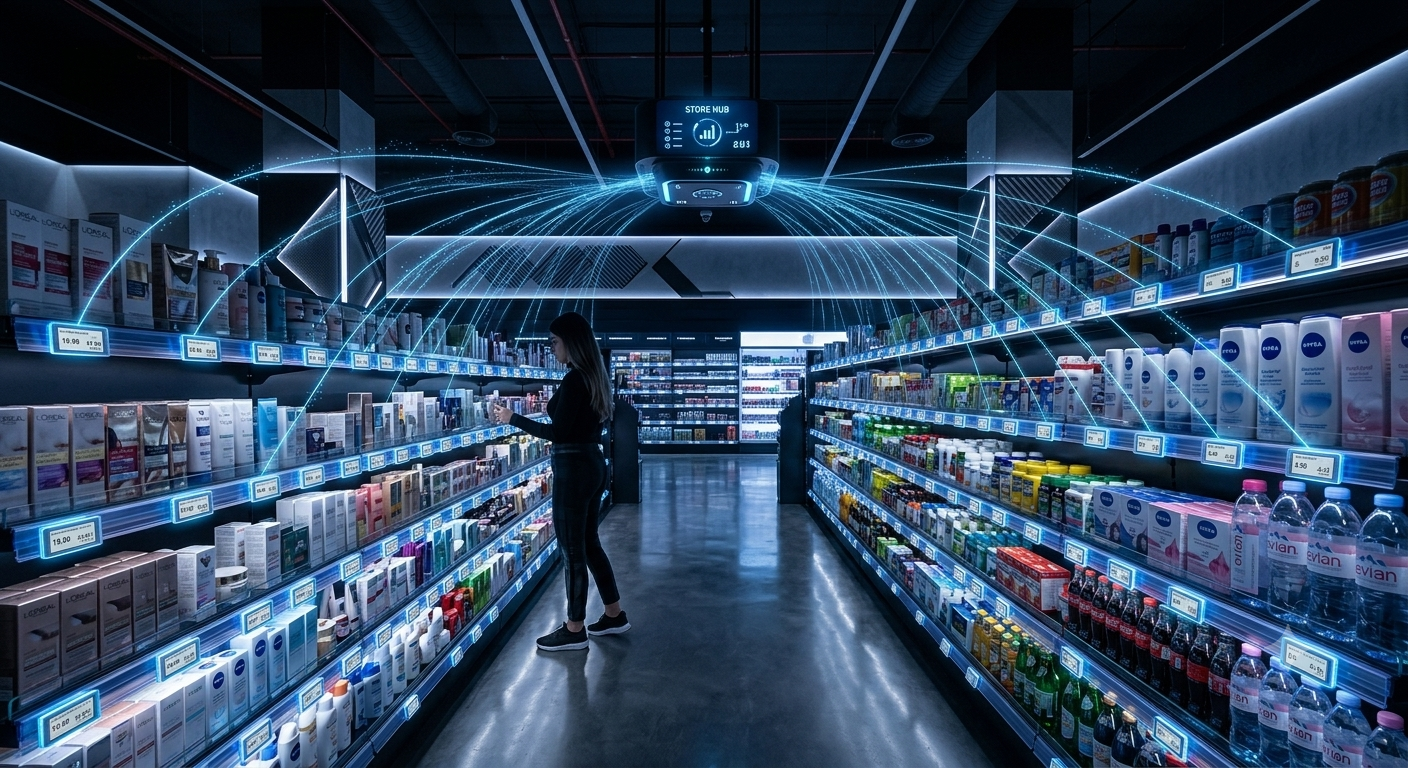
Electronic Shelf Labels (ESL) replace paper price tags with wireless e-ink displays that update from your ERP in seconds, so a price change becomes one push from head office instead of a night of printing and walking the aisles. SNTech's ESL deployments in Saudi hypermarket and supermarket chains have cut price-change labour hours by 80%, with Arabic and English labels, AI planogram monitoring and native SAP and Oracle Retail integration.
Complete Feature Set
- 1 Electronic Shelf Labels (ESL) – S, M, L sizes
- 2 Wireless price update across all labels in under 10 seconds
- 3 AI planogram compliance monitoring with live alerts
- 4 Shelf stock-out detection & automated replenishment alerts
- 5 Real-time shelf analytics and heat mapping
- 6 Integration with SAP, Oracle Retail & custom ERPs
- 7 Central management dashboard for multi-store networks
- 8 Promotional pricing automation & scheduling
- 9 Energy-efficient E-Ink displays (5+ year battery life)
- 10 Arabic & English dual-language label support
Where the 80% labour saving comes from
Every paper price change needs three manual steps: printing the new label, walking the floor to place it, and checking afterwards for labels that were missed or mismatched. ESL removes all three. A price change triggered in the ERP travels over the air to every affected label — in under 10 seconds per label across a networked store — with a confirmation log showing exactly which labels updated and which did not.
That is how SNTech's deployments across Saudi hypermarket and supermarket chains have measured an 80% reduction in price-change labour hours, alongside fewer pricing errors and disputes at checkout. Read the full ESL guide for Saudi retail.
Match the label to the shelf
Matching label size to shelf category is the single biggest factor in getting the labour saving — an oversized label wastes space on a small SKU, and an undersized one loses the impact a promotional end-cap needs:
- 2.1" (ESL-S) for small SKUs such as spices and beauty, with NFC tap-to-info for customers.
- 4.2" tri-colour (ESL-M) — the most versatile: price, barcode, promo badge and stock status for grocery, electronics and pharmacy, with a flashing LED for staff picking.
- 7.5" full-graphic (ESL-L) for shelf ends and fresh counters, with room for a QR code and nutritional information; IP65 for the fresh section.
What ESL does beyond price changes
Paired with SNTech's AI planogram monitoring, the same shelf network detects when a product is out of stock or misplaced against the approved layout and raises a replenishment alert before customers notice the gap. Promotions can be scheduled and released automatically — a midnight price drop for a flash sale needs nobody on the floor — and a multi-store chain can run region- or store-specific pricing from one dashboard.
Rollouts start with a single pilot store to validate label placement and wireless coverage, because steel shelving and refrigerated sections both affect signal range. The retailer sees the labour and error-rate improvement first-hand before committing chain-wide.
Paper labels vs electronic shelf labels
ESL is a hardware investment, so it is worth being clear about what changes:
| Paper labels | Electronic shelf labels | |
|---|---|---|
| A price change | Print, walk the floor, place, then re-check | One push from the ERP; under 10 seconds per label, with a confirmation log |
| Promotions | Staff on the floor at the moment a promotion starts | Scheduled in advance and released automatically |
| Price accuracy | Depends on every label being changed correctly | Shelf price matches the ERP, and failed updates are logged |
| Ongoing cost | Printing consumables and staff hours for every change | Around five years per battery; no printing or label stock |
| Upfront cost | Minimal | Labels, network and software — typically paid down by the labour saving in large-format stores |
The case is strongest where price changes are frequent and SKU counts are high, such as hypermarkets. A small store with few price changes should run the numbers carefully — which is exactly what a pilot store is for. Compare the three ESL sizes.
Where ESL is used
Hypermarkets
Thousands of SKUs and frequent promotions — where the labour saving alone typically pays down the hardware well within the first operating year.
Grocery & fresh
4.2" labels across grocery aisles and IP65 7.5" labels at fresh counters, with nutritional information and QR codes.
Pharmacy
Accurate, centrally controlled shelf pricing across pharmacy chains, with stock status on the label.
Electronics & multi-store chains
Region- or store-specific pricing from one dashboard, with AI analytics on shelf and sales data.
Frequently Asked Questions
How do Electronic Shelf Labels save retail labour costs?
ESL removes the manual printing, floor placement, and error-checking that paper labels require — a price change triggered in the ERP propagates to the labels in under 10 seconds per label, with a confirmation log. SNTech deployments have measured an 80% reduction in price-change labour hours across Saudi hypermarket chains.
How long do ESL batteries last?
Every SNTech ESL format runs roughly five years on its original battery, so ongoing maintenance is minimal — no printing consumables, ink or label stock to reorder.
Which ERP and POS systems does ESL integrate with?
SNTech's ESL platform integrates natively with SAP S/4HANA and Oracle Retail, as well as Shopify and custom ERP systems. Price changes in the ERP flow to the shelf labels automatically, with a full audit trail.
Can labels show Arabic and English?
Yes. SNTech's labels support Arabic and English dual-language content, including price, product description and promotional text.
Do ESLs work in refrigerated and fresh sections?
Yes. The 7.5" ESL-L is IP65 waterproof for fresh sections. Because refrigerated units and steel shelving affect wireless range, a pilot store is used to validate coverage before a chain-wide rollout.
How does an ESL rollout start?
With one pilot store, to validate label placement and network coverage in that layout and measure the labour and error-rate improvement before committing across the chain.
Related solutions and guides
Start with one pilot store
Tell SNTech's retail team about your store and price-change volume. We'll scope a pilot that shows the labour saving on your own shelves.
Plan an ESL Pilot →