Low Current and Security Systems for Saudi Facilities — CCTV, Access Control, Fire Alarm and AV
About This Solution
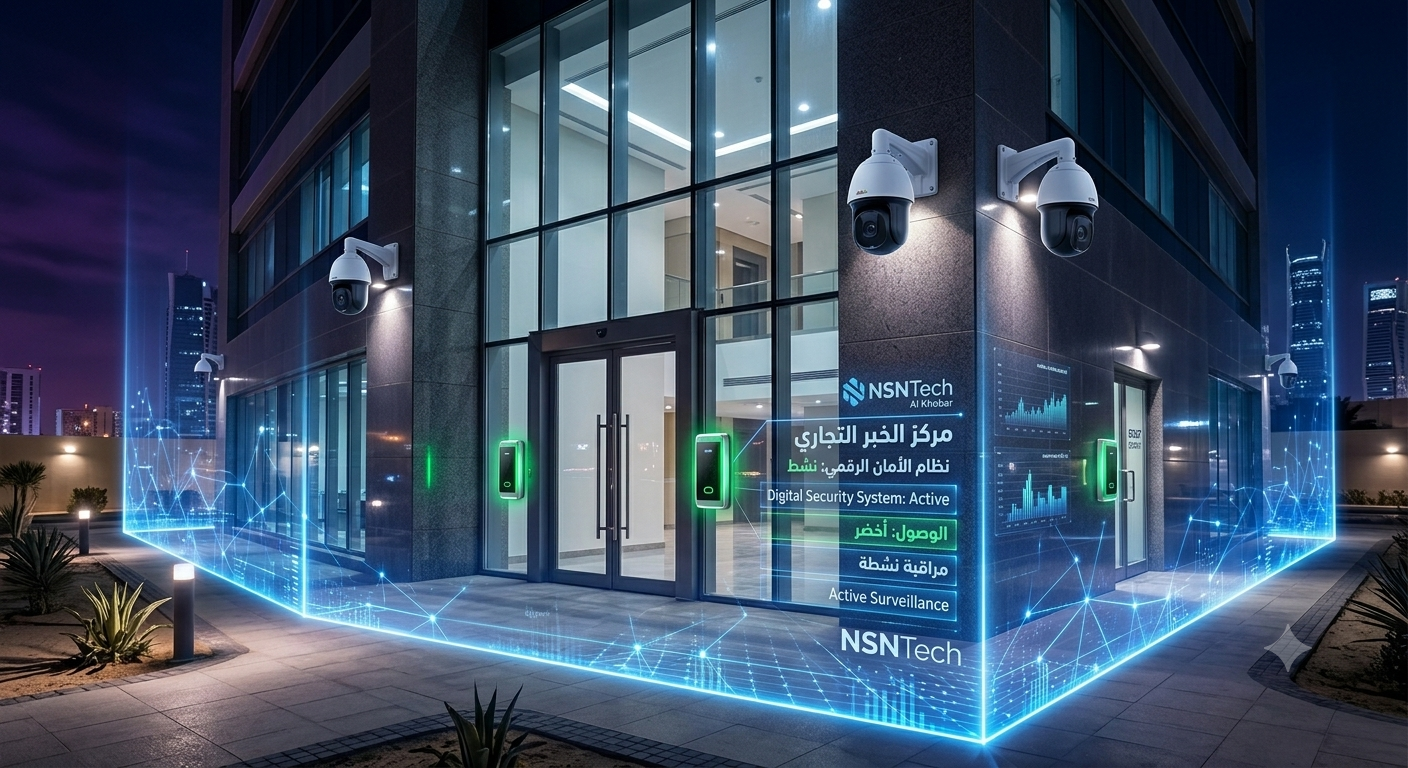
Low current (or ELV) systems are everything in a building that runs on low-voltage cabling rather than mains power: CCTV, access control, fire alarms, public address, audio-visual and the structured cabling that connects them. SNTech designs, supplies, installs and maintains them for commercial, industrial and government facilities across Saudi Arabia — as one integrated set of systems rather than separate contracts, with fire alarm designs prepared to Saudi Civil Defence requirements.
Industries That Use This Solution
Complete Feature Set
- 1 IP CCTV surveillance systems (HD, 4K, thermal)
- 2 Access control & electronic door locking systems
- 3 Automatic barriers and boom gates for vehicle access control
- 4 Fire alarm detection and addressable panel systems
- 5 Audio visual systems (display screens, IPTV, MATV, projectors)
- 6 Structured cabling (Cat6/6A, fiber optic)
- 7 Raised floor systems for data centers and server rooms
- 8 Public announcement and intercom systems
- 9 Video conferencing and AV integration
- 10 Maintenance and SLA service contracts
Why one integrator for all the low current systems
CCTV, access control, fire alarm and AV are often bought as separate packages, and the gaps show up later: an access door that does not release on a fire alarm, cameras that do not follow an access event, three maintenance contracts and nobody responsible for the whole. Designing them together — on one structured cabling backbone, with CCTV, access and fire integrated — avoids those gaps and gives one party responsibility for the result.
SNTech's scope covers the full stack: IP camera systems in HD, 4K, PTZ and thermal with video analytics and control-room integration; card, biometric and PIN access with multi-site management and audit trails; conventional and addressable fire alarm panels; public address and voice evacuation; IPTV, MATV, video conferencing and display systems; Cat6/6A and fibre structured cabling; raised floors for data centres; and automatic boom gates, turnstiles and vehicle barriers.
Fire alarm systems and Civil Defence
Fire alarm systems in Saudi Arabia are subject to Civil Defence requirements, so the design matters as much as the equipment. SNTech prepares fire alarm designs to Saudi Civil Defence requirements, integrates detection with sprinkler systems where needed, and offers maintenance and inspection contracts to keep the system in working order after handover.
Conventional vs addressable fire alarm panels
SNTech installs both. The difference is how precisely the panel can tell you where the alarm is:
| Conventional | Addressable | |
|---|---|---|
| How it locates an alarm | By zone — a group of detectors wired together | By individual device — each detector has its own address |
| What responders see | "Fire in zone 3" | The exact detector and location |
| Fault finding | Search the zone to find the faulty device | The panel identifies the faulty device |
| Best for | Smaller buildings with simple layouts | Larger or complex facilities where locating the alarm quickly matters |
| Cost | Lower upfront | Higher upfront; easier to expand and maintain |
The right choice depends on the building's size, layout and occupancy — and on what the Civil Defence approval for the site requires.
Where low current systems are used
Government facilities
CCTV, access control and vehicle barriers for government buildings and campuses, with command and control room integration. Government sector →
Ports & terminals
Container yard access control integration, alongside SNTech's PWAS and fleet systems. Ports sector →
Commercial & industrial sites
Integrated CCTV, access and fire alarm on one cabling backbone, with maintenance and SLA contracts after handover.
Data centres & server rooms
Structured copper and fibre cabling, raised floors, containment and rack installation.
Frequently Asked Questions
What are low current systems?
Low current (or extra-low-voltage, ELV) systems are the building systems that run on low-voltage cabling rather than mains power — CCTV, access control, fire alarm, public address and intercom, audio-visual, and the structured data cabling that connects them.
What is the difference between conventional and addressable fire alarms?
A conventional panel reports an alarm by zone, so responders know the area but not the exact detector. An addressable panel identifies each device individually, which makes alarms faster to locate and faults easier to find — at a higher upfront cost. SNTech installs both.
Are SNTech's fire alarm designs Civil Defence compliant?
SNTech prepares fire alarm designs to Saudi Civil Defence requirements and integrates detection with sprinkler systems where required, with maintenance and inspection contracts after handover.
Can CCTV, access control and fire alarm be integrated?
Yes. Designing them together on one structured cabling backbone lets systems work with each other — for example, access doors releasing on a fire alarm and cameras following access events — with one party responsible for the whole.
Does SNTech maintain the systems after installation?
Yes. SNTech offers maintenance and SLA contracts for installed low current systems, including fire alarm inspection.
Related solutions
Request a site survey
Tell SNTech about your facility and which systems you need. We'll survey the site and design CCTV, access, fire and AV as one integrated package.
Request a Site Survey →